The recent US ban on imported humanoid robots — primarily targeting China, which currently manufactures roughly 85% of the world’s supply — is a massive geopolitical shift. While the policy aims to protect domestic manufacturers, I believe this protectionist move will ultimately backfire by slowing down innovation both globally and within the US, especially in the short and medium term.
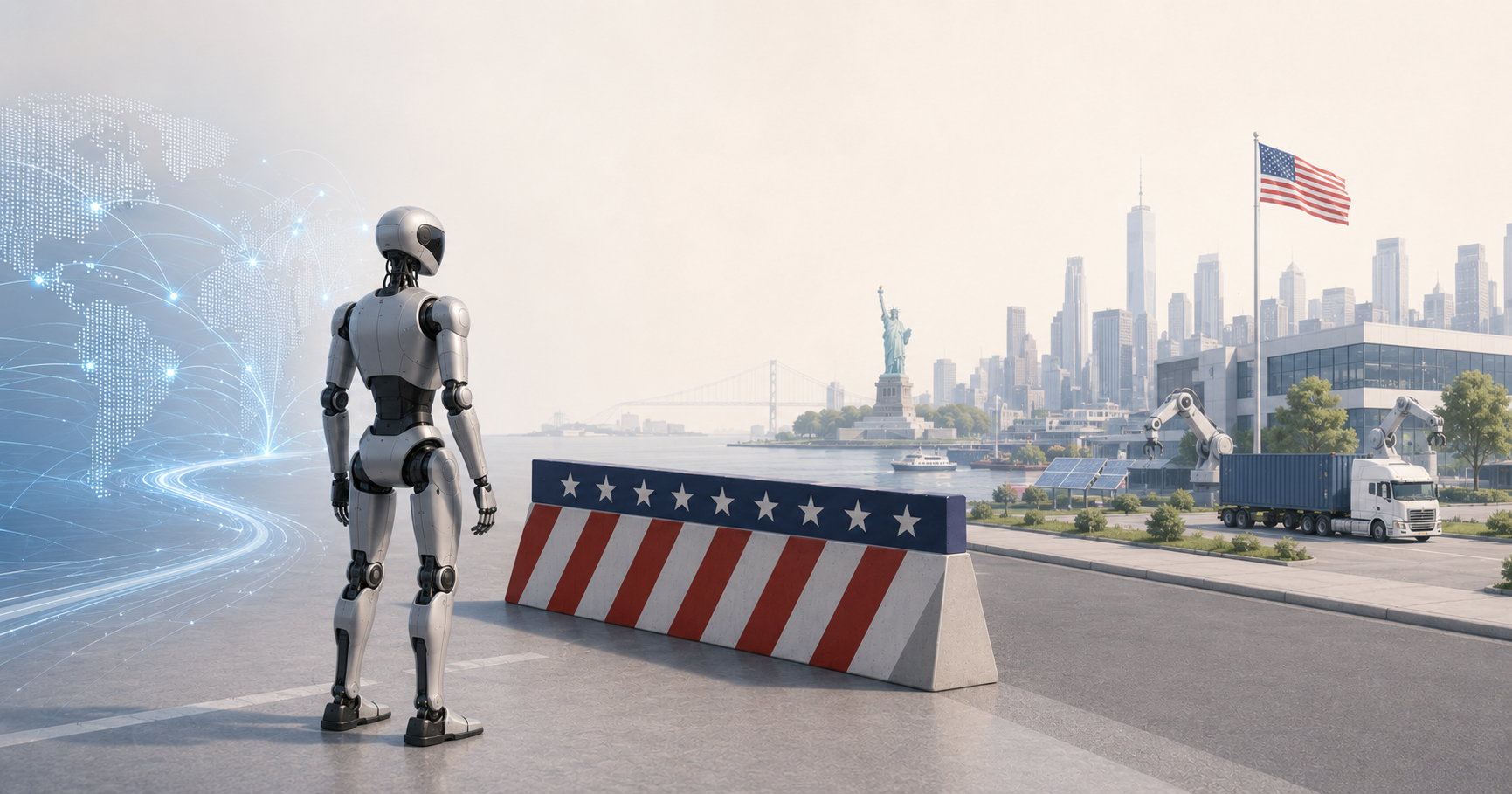
By cutting off access to the world’s primary hardware supplier, the availability of humanoid robotics will sharply decline in the US, drastically delaying widespread adoption. Healthy competition drives progress. Insulating local industries from global markets rarely fosters long-term strength.
Instead of halting China’s momentum, this ban will likely have the opposite effect:
- Resilient Chinese Market: China possesses a massive internal market capable of sustaining its own robotics sector without US buyers.
- Global Acceleration: Other countries will continue to purchase and rapidly adopt affordable Chinese humanoids, reaping the benefits of advanced automation much faster than the US.
- New Global Industries: Access to cheap, accessible robotics will likely spark entirely new downstream industries abroad—industries that the US may miss out on entirely due to artificial scarcity.
Geopolitics is complex, and very few nations have an internal market large enough to sustain this kind of technological self-reliance. However, more choice is always better for the consumer and the developer. True innovation and its societal benefits only accelerate when a market is open, competitive, and accessible.
Recent coverage by AsiaBits and CNN underscores how deeply this ban is shaking up the global tech landscape, proving that the race for humanoid robotics is no longer just about engineering — it is about trade borders.
What are your thoughts on the ban? Do you think the US can build up its supply chain fast enough to compete, or will this policy leave American tech in the dust? Let me know in the comments below! 🤠


Leave a Reply